

People rarely have nuanced opinions about sweetgum trees – you either love ‘em or you hate ‘em!
But whether your feelings tend toward the sweet or the sour, one thing is for sure: Sweetgums can certainly cause problems in some places.
And that unfortunately includes the metro Atlanta area.
We’ll share some of the most common sweetgum problems below, so that you can keep a better eye on your trees, spot potential problems while they’re still treatable, and know when you need to get professional help.
Table of Contents
American Sweetgum Tree Facts & Figures: The Basics

Sweetgum trees – known to arborists as Liquidambar styracifula — are impressive deciduous trees that are native to large portions of North and Central America.
They’re commonly planted for shade and ornamental purposes throughout the southeastern United States, and they’re also important timber trees in some areas.
Some of the basic facts about sweetgums include:
- Height: 75 feet or more (it grows tallest in forest environments)
- Crown Spread: 50 feet or more (though some cultivars have a slender silhouette)
- Trunk Diameter: 12 to 48 inches
- USDA Hardiness Zone: 5B through 10A
- Growth Rate: 2 to 3 feet per year
- Fall Color: Showy red, yellow, or orange, or maroon leaves
- Light Requirements: Partial to full sun
- Drought Tolerance: Moderate
7 Common Sweetgum Tree Problems: Potentially Dangerous Issues
With the basics out of the way, we can share some of the most common sweetgum problems we see while caring for trees in the Atlanta area.
This list certainly isn’t exhaustive, but it includes most of the things our clients experience with these awesome-but-occasionally-problematic trees.
1. Litter

We may as well start with everyone’s favorite sweetgum complaint: They produce a ton of what arborists call “litter.”
Litter can refer to anything that falls from trees, including leaves, pine cones, seed pod husks, or bark.
But in the case of sweetgums, litter means hundreds of woody fruits, often called sweetgum balls or simply gum balls. And as even the biggest sweetgum fans will have to admit, the gum ball problem is annoying.
Rest assured, it’s normal for sweetgums to drop lots of these fruits each year – it’s rarely cause for concern. The biggest problem is that they can serve as a trip hazard. Also, stepping on one barefoot is only slightly less painful than stepping on a Lego.
There are essentially three ways to deal with the gum balls:
- Have the tree removed completely, though this is a drastic step for a healthy tree.
- Use a rake or leaf blower to remove the fruits (or better yet, have your kiddos do it).
- Have an ISA-Certified Arborist provide growth-regulating injections during the earliest days of spring to prevent the tree from producing sweetgum balls all year.
It’s worth noting that horticulturists have developed a sweetgum cultivar that doesn’t produce sweetgum balls at all. Often called sweetgum Rotundiloba (which is technically called Liquidambar styraciflua ‘Rotundiloba’), it is pretty similar to normal sweetgums, except that its leaves feature rounded tips.
2. Bleeding Necrosis
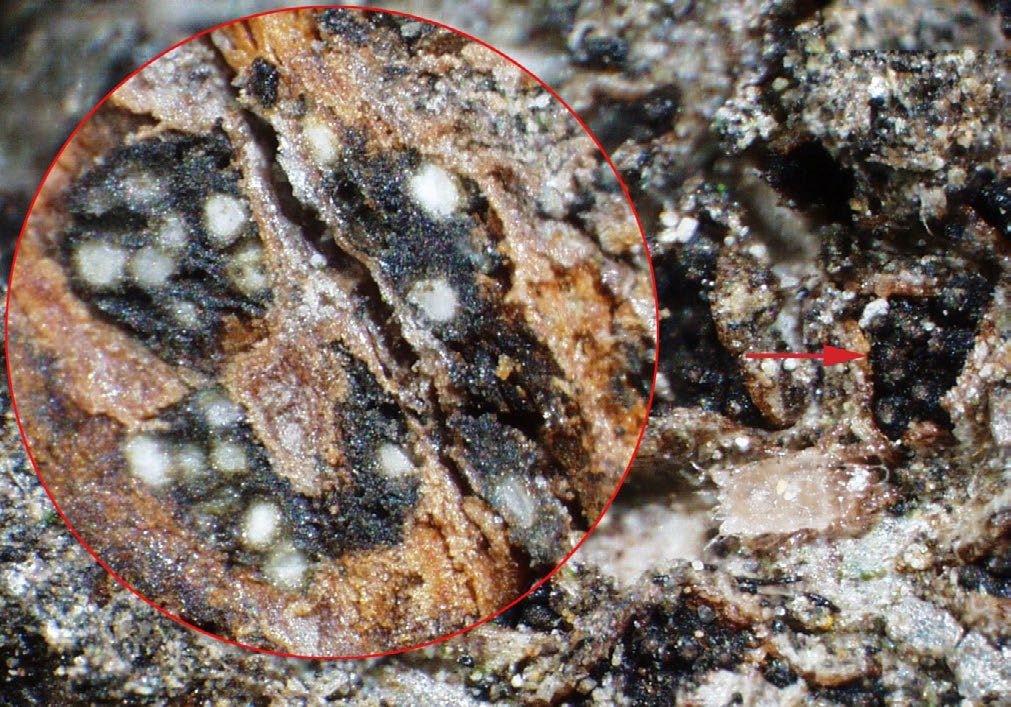
Bleeding necrosis is a common fungal problem of sweetgums.
Caused by an organism called Botrysphaeria berengeriana, the disease makes portions of the tree look as though they have been doused in oil. These deposits can occur just about anywhere, but they’re often seen at the base of the trunk.
In addition to the oily liquid leaking out from the bark, you may also notice discolored inner bark (when visible). At the early stages of infection, the liquid may have a sweet, tarry odor.
It isn’t completely clear why some sweetgums fall victim to this fungus, while others – often growing in the same location – remain problem-free. However, some plant health care specialists have noted that grade changes near the tree base are commonly associated with the condition.
There is no definitive treatment for the condition, aside from taking good care of your sweet gum tree. Pruning affected limbs well beyond the damaged bark tissue may also help to stop further spread of the disease.
3. Invasive Roots

The American sweetgum is notorious for producing a large number of shallow surface roots (though they can also develop large taproots in upland areas).
As long as they’re adequately protected from lawn mowers, string trimmers, and other kinds of trauma, these surface roots don’t cause problems for the tree. But they can cause serious issues for homeowners and property managers. In many cases, sweetgum roots end up damaging concrete driveways and lifting sidewalks, both of which serve as trip hazards and necessitate expensive repairs.
Unfortunately, there’s not much that can be done to address this problem once it occurs; it’s rarely advisable to prune the root systems of mature trees.
The best strategy is to avoid planting these trees in places where these kinds of issues will be a problem. However, it may be possible to transplant young trees and move them to a place where they won’t cause damage.
4. Limb Drop

One of the most concerning problems sweetgums have is their tendency to shed large branches without warning. Called Sudden Limb Drop, this phenomenon occurs in a variety of tree species, but it’s unfortunately common in sweetgums.
Sudden Limb Drop is a much different phenomenon than the kind of branch failures seen during severe storms. In fact, it often occurs unexpectedly, during completely calm weather. Limb drop typically occurs in the summer, especially during years in which rainfall levels are below normal.
There’s no universal consensus regarding the cause of Sudden Limb Drop, and there are likely a number of issues at play. However, some hypothesize that sweetgums react to drought conditions by cutting off the water supply to large branches, which ultimately causes them to be shed.
There’s not much you can do to prevent Sudden Limb Drop, except to provide good supportive care. This includes things like placing an appropriate amount of mulch over the critical root zone (taking care to avoid placing mulch directly against the trunk). You’ll also want to protect the trunk and roots from mowers and small mammals.
However, it is also wise to prepare for the worst. And this means having an arborist inspect the tree, identify any potential targets, and provide a recommended mitigation strategy.
5. Twig Pruners

The larval stage of small beetles, twig pruners (Elaphidionoides villosus) are tiny insects that can cause issues for sweetgums.
Their lifecycle begins in the spring, generally around the time of bud break, when female beetles chew holes in the bark and deposit eggs. The larvae begin hatching in late summer and immediately begin boring into the wood. They feed on the sweetgums throughout the growing season and ultimately cause the branch tips to die.
A short while later, each larva goes on the ride of its life. The tree begins to shed these dead twigs, while the small larvae remain inside during the fall. Once on the ground, the larvae will pupate and wait through the winter before tunneling out as adults and starting the cycle anew the next spring.
Dealing with this pest involves providing good supportive care and collecting dead plant matter from below trees as quickly as possible. It’s also important to avoid overfertilizing your trees, as this appears to make them susceptible to these insects.
Sometimes, pyrethroid-based treatments have provided effective pest-control when applied the spring after an initial infestation.
6. Anthracnose

Anthracnose is a group of fungal diseases that can affect a litany of different tree species. Sometimes called leaf spot, the disease is caused by the fungus Gloeosporium nervisequum.
This particular fungus is usually spread via contaminated water. It causes small, yellow to brown leaf spots to appear at first.
But as the disease progresses, the brown spots grow and sometimes turn black. These spots typically have irregular margins, and they can occasionally spread to cover the entire leaf. By the end of the growing season, you may be able to see small black fruiting bodies (like tiny mushrooms) in some of these spots.
While this disease rarely kills trees outright, it can lead to complete defoliation. When this occurs over several years, the tree will undoubtedly be weakened and therefore become more vulnerable to secondary pests and pathogens.
To treat this disease, you’ll want to be careful with irrigation and ensure that the trees have plenty of airflow — moisture encourages the growth of many fungi, including the one responsible for anthracnose. It’s also important to collect and destroy affected leaves as they’re shed. In some cases, fungicides containing chlorothalonil or propiconazole have proven effective when applied in the late winter or early spring.
7. Eastern Tent Caterpillars

As mentioned, sweetgums are largely resistant to common insect pests, aside from a handful of creepy crawlies that use the species as a host plant. And one of those other bugs that occasionally infests the tree is the eastern tent caterpillar – known to biologists as Malacosoma americanum.
Gregarious little cuties, eastern tent caterpillars often exist in groups of up to 200 individuals. Named for their tendency to construct rather large silken “tents” shortly after hatching from eggs, these insects feed on a variety of different tree species, including sweetgums.
Eastern tent caterpillars aren’t directly toxic to trees or dangerous to humans (though some people are allergic to them). But they are hungry little buggers, who occasionally defoliate entire trees. This can stress the trees, leaving them vulnerable to secondary pathogens.
However, isolated infestations generally aren’t a huge issue for healthy trees. If you’re concerned about these insects, you’ll want to contact an ISA-Certified Arborist. Sometimes, pruning the limbs containing tents is sufficient to eliminate the problem, but there are also insecticide treatments available.
The Problems with Sweetgum Trees: FAQ

Still have questions about problems with your sweetgum? We’ll try to help by answering some of the most common ones below!
Why is my American sweetgum tree dying?
Your sweetgum may be declining for any number of reasons, ranging from fungal pathogens to poor soil conditions. The only way to know for certain is to have an ISA-Certified Arborist inspect your tree and get to the bottom of the issue.
What is a normal sweetgum tree growth rate?
In ideal conditions, sweetgums may grow 3 feet taller each year. But more commonly, they put on about 2 feet of height per year.
Are sweetgum tree root problems common?
Unfortunately, yes – sweetgum roots commonly damage sidewalks and other structures. That’s why it is important to plant them in wide-open spaces.
Is sweetgum tree pruning necessary?
It is usually wise to provide every young tree with structural pruning to ensure it develops in a safe and structurally sound manner. Additionally, mature sweetgum trees should be pruned as necessary to remove dead or dying branches, address problematic branch junctions, and ensure clearance from power lines and other potential hazards.
What is sweetgum blight?
Sweetgum blight is a disorder best known for affecting sweetgums on timber plantations during the middle of the 20th century. Its exact cause is unknown, but fortunately, it isn’t terribly common.
Are sweetgum tree balls poisonous?
No, sweetgum tree balls are not poisonous to humans or pets. That said, we certainly wouldn’t recommend eating them!
Why is my American sweetgum tree dropping limbs?
Sweetgum trees commonly drop limbs in the summer due to a phenomenon called Sudden Limb Drop. This can occur in completely green, healthy limbs, but diseased, pest-riddled, and damaged limbs are most commonly affected.
Is it “sweetgum” or “sweet gum?”
The best common name for the plant botanists call Liquidambar styraciflua is “American sweetgum tree.” But you call the tree in your yard whatever you like — sweet gum, sweetgum, or simply gum tree — we’ll know what you mean.

While sweetgums can cause issues for homeowners and property managers, it’s important to understand that these trees do have a lot going for them.
For example, despite some of the pest problems mentioned above, healthy sweetgums are generally much less susceptible to insects than many other trees are (looking at you, pine trees). Additionally, sweetgum trees are adaptable and capable of thriving in many different growing conditions.
And perhaps most importantly, sweet gum tree fall color provides a veritable fireworks show each October and November.
So, be sure to enjoy your sweetgums! Just keep an eye on them. If you see any problems, or you’d just like to have them inspected by an ISA-certified arborist, fill out our contact form and we’ll stop by at a convenient time to take a look.
This is a sample article. We provide content solutions for tree-care service providers. Please contact us and let us know how we can help solve your content needs.
One Response
My neighbor planted over a dozen slender sweet gum trees close to my picket fencing. I am worried about the falling limb issues with this species and its seed pods clogging my storm drains close by. Any suggestions???